James Hardie vs. PVC and Composite Cladding for Your Home

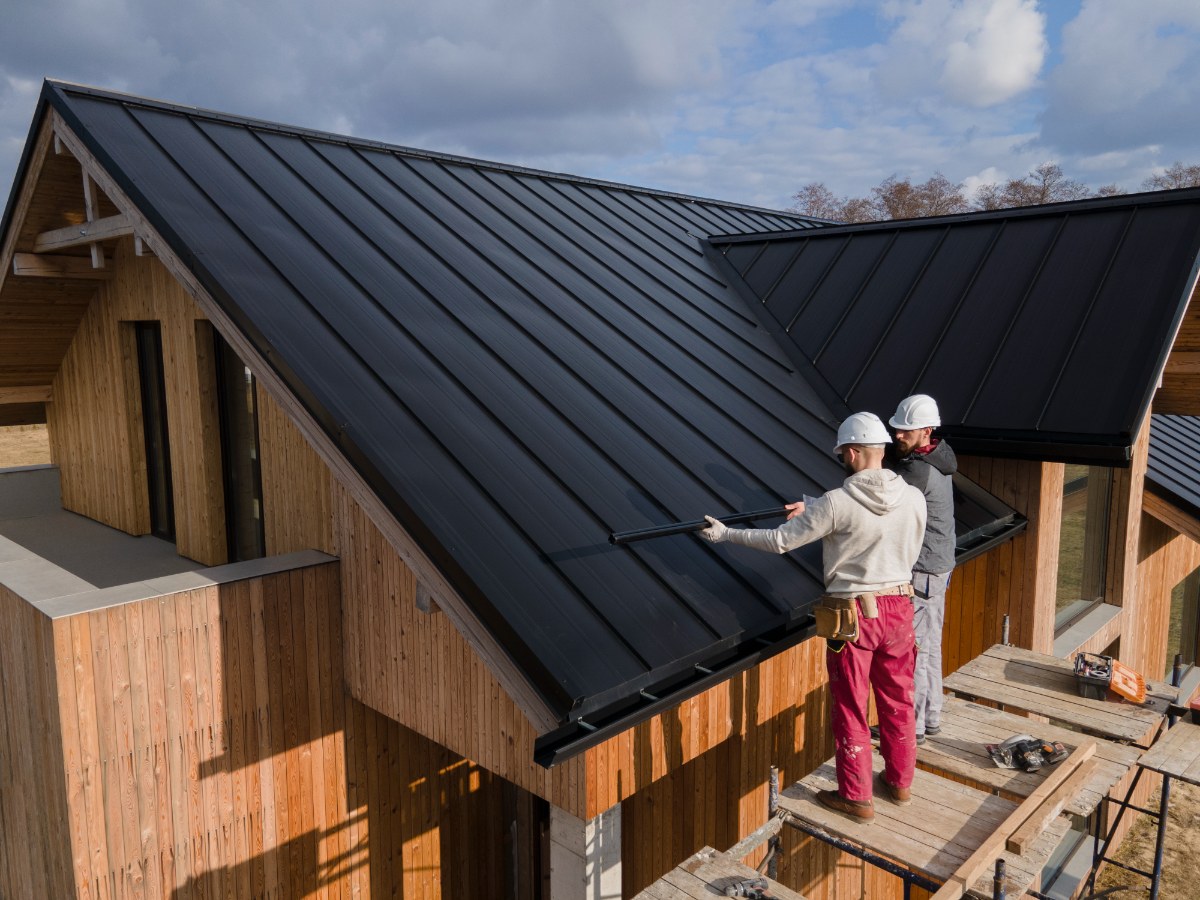
Ready to Upgrade Your Home’s Exterior?
Book a design consultation and we'll walk your elevations, tell you exactly what we'd specify and why - and be straight with you if fibre cement isn't the right answer.

Why Choose Fiber Cement Siding for Your Home?
James Hardie siding is a popular choice for homeowners seeking low-maintenance, long-lasting exterior solutions. Its resistance to rot, fire, and pests makes it well-suited for Canadian climates, while its clean profiles support both modern and traditional architecture. This siding is also highly customizable and provides many profile options for both traditional and contemporary style homes. When installed correctly, fiber cement siding enhances curb appeal and protects long-term property value.
We sell cellular PVC and composite. We also tell you where not to use it.
Alliance Exteriors installs PVC, WPC and composite products as a standard part of our work. We specify them on most Hardie jobs we build. So this page is not an argument that cellular PVC is a bad material.
It is an argument about scope.
Cellular PVC is excellent at a specific set of jobs, and on those jobs it beats wood decisively. As the field cladding across a full elevation — the large, continuous, sun-exposed surfaces that make up most of a house — it is the wrong choice, and fibre cement is the right one.
That is the whole page. The rest is why.
Where cellular PVC is genuinely the better material
We are putting this first because we mean it.
Trim, corner boards, window and door surrounds
Cellular PVC does not rot. It does not absorb water. It holds a crisp machined profile, which matters enormously on trim, where the eye reads a clean edge or a fuzzy one from thirty feet away. A wood corner board in the GTA is a maintenance schedule. A cellular PVC corner board is not.
Wet zones and splash zones near grade
The bottom of a wall is where water collects, splashes back off hard landscaping, and sits under snow load for months. Anything organic down there is on a clock. Cellular PVC is indifferent to it. When we detail a base condition, a skirt band, a column wrap or a trim piece sitting close to grade, PVC is often the material we want.
Small, complex, high-detail pieces
Brackets, mouldings, sills, rake and frieze details. Pieces that get machined, mitred and glued rather than nailed through a face. PVC takes that work well.
None of this is a consolation prize. These are real applications where the material's properties are the entire point, and we specify it there on purpose. See PVC, WPC & Composite Siding for what we install.
Why the field of the wall is a different problem
Trim is short, narrow, broken up by joints every few feet, and usually partly sheltered. The field of a wall is long, continuous, and fully exposed. Those are not the same engineering problem, and the standards behind these products reflect that.
What the wood-plastic composite standard is actually for
Wood-plastic composite is governed by ASTM D7032, and the full title tells you what it covers: "Standard Specification for Establishing Performance Ratings for Wood-Plastic Composite and Plastic Lumber Deck Boards, Stair Treads, Guards, and Handrails."
Deck boards. Stair treads. Guards. Handrails. It is a horizontal walking-surface and guard standard. It is not a cladding specification.
That matters, and it is worth being precise about why. ASTM D7032 is not a weak document. It explicitly evaluates ultraviolet resistance, freeze-thaw resistance, biodeterioration, temperature and moisture effects, creep-recovery, flame spread index, slip resistance and mechanical fastener holding capacity. The standard states its purpose is "to establish a basis for code recognition of these products or systems in exterior applications."
Read that list again. Those are the properties the standard's own authors identified as needing to be measured for this material. UV. Freeze-thaw. Biodeterioration. Movement with temperature and moisture. Creep. Fastener holding.
We are not saying WPC fails those evaluations. We are saying the material's governing specification is written for horizontal deck and guard components, and it tests exactly the properties you would worry about if you took that material and hung it across a two-storey south elevation instead.
A house clad entirely in composite is asking a decking material to do a cladding material's job.
What the rigid PVC siding standard says about content
ASTM D3679 is the standard for rigid PVC siding, and it caps non-PVC content at less than 20% by volume. That is a useful number for a homeowner to hold onto: by that standard, a product with more filler than that is not rigid PVC siding.
If someone is selling you a "PVC composite" board for a whole elevation, the fair question is what standard it is manufactured and evaluated to, and what is actually in it. Ask for the document. A good supplier will hand it over.
What fibre cement is manufactured to
James Hardie fibre cement is made to ASTM C1186 Grade II Type A. Type A is the classification for exterior applications directly exposed to sun, rain and snow. That is not a footnote — that is the entire application we are discussing. The companion ASTM C1185 test regime includes freeze-thaw testing for cladding products.
Fibre cement is cement, sand, cellulose fibre and water plus proprietary additives, formed under pressure, textured, cured and cut. It is a mineral board, and it is specified for the exposure it is going into.
Movement, and why a full elevation punishes it
PVC and composite products move significantly with temperature. That is not a defect; it is a property. It is also why these products carry demanding fastening and gapping requirements.
On a piece of trim, that movement is manageable. The runs are short and the accommodation is small.
Across the long horizontal runs of a full elevation, it is a different exercise. GTA temperatures swing from roughly -25 C to +35 C over a year. Every joint and every fastener on that wall has to accommodate the movement, correctly, the first time. The field tolerance for error is small, and the consequence of getting it wrong is visible from the street for as long as you own the house.
Fibre cement's dimensional behaviour is much less demanding on the installer over long runs. On a project with a lot of wall and a lot of crew hours, that difference compounds.
Fire, stated carefully
Fibre cement is noncombustible per ASTM E136, and Class A per ASTM E84 with a flame spread of 0 and smoke developed of less than 5 (ICC-ES ESR-2290, ESR-1844). Hardie states a caveat itself, and we repeat it: that performance belongs to the board, not the coating. Paint may char in direct flame even though the substrate will not ignite.
Cellular PVC and WPC are not noncombustible materials. If fire performance is a factor on your project, confirm the fire performance of the specific product you are being sold against your project's requirements, in that product's own documentation.
Repairs
Fibre cement boards are individually replaceable. If a ladder goes through one, you take out one board and put in one board. It installs over a drained, ventilated assembly, which is what makes the rest of the wall work.
Honest drawbacks of fibre cement
- Cost. Fibre cement costs more up front than vinyl, and more than most composite options.
- Weight and labour. It is heavy. It takes more crew hours to install correctly than PVC trim or vinyl siding.
- Silica dust. Cutting it releases crystalline silica, which requires proper tooling and dust collection. James Hardie maintains a formal silica safety program. Ask any contractor how they handle it.
- Sealant. Joints are sealed with ASTM C920 Grade NS Class 25+ or ASTM C834 latex sealant, and that sealant is a maintenance item.
- No insulating value. Neither fibre cement nor PVC contributes meaningfully. That comes from the assembly behind.
At a glance
| James Hardie fibre cement | Cellular PVC / WPC composite | |
|---|---|---|
| Right job | The field of the wall — large, continuous, sun-exposed elevations | Trim, corner boards, window and door surrounds, wet zones near grade, machined detail |
| Governing standard | ASTM C1186 Grade II Type A — exterior, directly exposed to sun, rain and snow | WPC: ASTM D7032, written for deck boards, stair treads, guards and handrails |
| Movement | Modest; forgiving over long runs | Significant with temperature; demanding fastening and gapping over long runs |
| Rot and water | No organic food source in the board | Does not rot and does not absorb water — its core strength |
| Fire | Noncombustible (ASTM E136); Class A per ASTM E84, flame spread 0, smoke under 5 | Not noncombustible; confirm the specific product's documentation |
| Repairs | Individual boards are replaceable | Depends on profile and fastening method |
How we actually specify it
On a typical Hardie project we build, you will find cellular PVC on the corner boards, around the windows and doors, and anywhere the detail sits close to grade. The field of the wall is fibre cement. That is not a compromise between two products — it is each material doing the job it is best at.
If a contractor proposes composite for an entire elevation, ask which standard the product is evaluated to and what the fastening schedule is over a twenty-foot run. The answer will tell you whether they have thought about it.
Common questions
Is cellular PVC a bad product?
No, and we would not install it if it were. It does not rot, does not absorb water and holds a machined edge better than wood. Those properties make it the correct choice for trim, corner boards and wet zones near grade. The argument on this page is about using it as the field cladding across a full elevation, which is a different job.
Why does it matter that ASTM D7032 is a decking standard?
Because a standard is written around an application. D7032 evaluates UV resistance, freeze-thaw resistance, biodeterioration, temperature and moisture movement, creep and fastener holding — for deck boards, stair treads, guards and handrails. Fibre cement's standard, ASTM C1186 Grade II Type A, is written for exterior boards directly exposed to sun, rain and snow. That is the application we are talking about.
Will composite siding warp on my house?
We will not make a prediction about a specific product we have not seen the documentation for. What we can say is that these products move meaningfully with temperature, that the movement has to be accommodated at every joint and fastener across a long run, and that the tolerance for installation error is smaller than with fibre cement.
Can I mix fibre cement and PVC on one house?
Yes. That is what we recommend and what we build most often — fibre cement for the field, cellular PVC for the trim and the wet details.
What about fire?
Fibre cement is noncombustible per ASTM E136 and Class A per ASTM E84, with flame spread 0 and smoke developed under 5. Cellular PVC and WPC are not noncombustible. If fire performance matters on your project, get the specific product's own documentation rather than a general assurance from anyone, including us.
← Back to the full James Hardie siding guideHow fibre cement compares to vinyl siding →Our PVC, WPC and composite siding work →
Not sure which material is right for your house?
That is what our exterior design consultations are for. We will walk your elevations, tell you what we would actually specify and why, and be straight with you if fibre cement is not the right answer.
Book a Design Consultation

Get expert guidance on the best siding for your home
Whether you’re upgrading your home or managing a custom build, our team is here to help you make confident, informed decisions.
© 2026 Alliance Exteriors Inc. All rights reserved.
Privacy Policy