James Hardie vs. Vinyl Siding: What the Documents Actually Say

Ready to Upgrade Your Home’s Exterior?
Book a design consultation and we'll walk your elevations, tell you exactly what we'd specify and why - and be straight with you if fibre cement isn't the right answer.

Why Choose Fiber Cement Siding for Your Home?
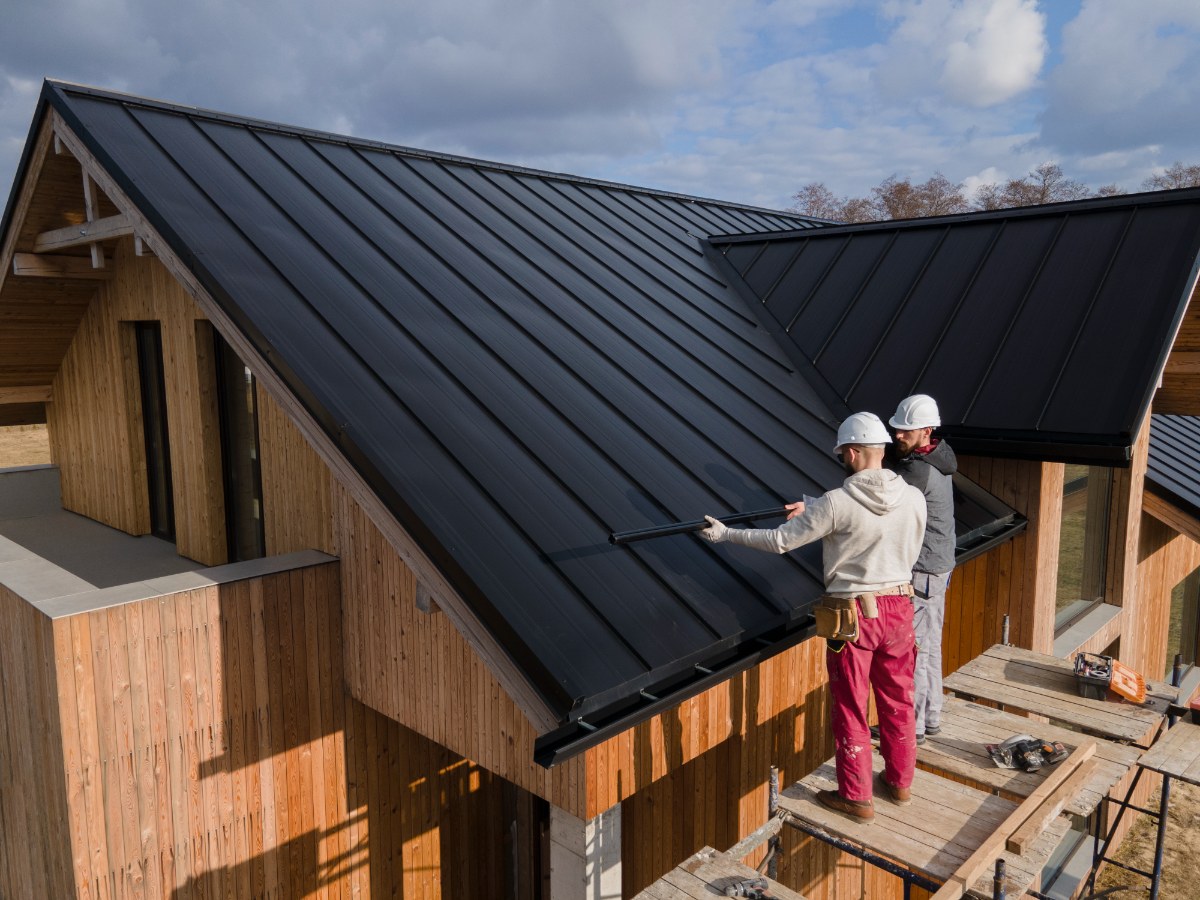
James Hardie siding is a popular choice for homeowners seeking low-maintenance, long-lasting exterior solutions. Its resistance to rot, fire, and pests makes it well-suited for Canadian climates, while its clean profiles support both modern and traditional architecture. This siding is also highly customizable and provides many profile options for both traditional and contemporary style homes. When installed correctly, fiber cement siding enhances curb appeal and protects long-term property value.
First, the honest concession
If you are buying a rental property, or a flip you intend to list in eighteen months, vinyl can be the correct financial decision. The math is straightforward.
The 2025 Cost vs. Value Report (Zonda/JLC) — US national averages, in USD — puts a vinyl siding replacement at a job cost of $17,950 against a resale value of $17,313. That is 97% of the spend recouped. Fibre cement in the same report: $21,485 job cost, $24,420 resale value, 114% recouped, ranking fourth of twenty-eight projects surveyed. Fibre cement costs roughly 20% more up front.
For a short hold, spending 20% less and recovering 97% of it is defensible.
Here is a figure that does not help our argument, which we will give you anyway because you will find it the moment you search: the InterNACHI/NAHB published lifespan chart lists vinyl siding at 60 years. That is a long time, and we are not going to hide it. But a service life figure and a warranty are two very different documents. Hold that thought.
Vinyl is a plastic, and the standard says so
Vinyl siding is manufactured to ASTM D3679, the standard specification for rigid PVC siding. The standard describes extruded single-wall siding made from rigid (unplasticized) PVC compound, with non-PVC materials limited to less than 20% by volume. It requires the product to be free of peeling, chipping, cracking, flaking and pitting, and prohibits elemental lead.
It is a serious standard. It covers dimensions, warp, heat shrinkage, impact strength, coefficient of linear expansion, gloss, colour stability and weathering, wind load resistance — and nail slot allowance for thermal expansion.
That last item is the one to sit with. The standard has to specify how much room the fasteners leave for the panel to grow and shrink, because a rigid PVC panel moves with temperature. That movement governs how the product must be installed.
Kaycan, a Canadian manufacturer, states that its vinyl siding "Conforms to ASTM D3679" and is VSI Certified. That is a legitimate claim. We cite Kaycan throughout this page specifically because their documents are public, clear and well written. Nothing here should be read as a statement about any other manufacturer's products or warranties.
James Hardie fibre cement is a different material category. Cement, sand, cellulose fibre, water and proprietary additives, formed under pressure, textured, cured and cut. It is not a plastic. There is no plasticiser in it to embrittle over time and no petroleum resin to soften in the sun. It is manufactured to ASTM C1186 Grade II Type A, and the ASTM C1185 test regime for cladding includes freeze-thaw testing.
Heat and reflected sunlight
This is the failure mode most GTA homeowners have never heard of, and it is documented by a glass manufacturer, not a siding company.
Cardinal Glass Industries Technical Service Bulletin IG14 (08/2022) states that vinyl siding can soften and visibly distort at approximately 165°F (74°C), citing a heat deflection temperature range of 142°F to 192°F from Lawrence Berkeley National Laboratory research. Slight distortion is measurable within about one hour at 165°F and becomes clearly noticeable after roughly six hours.
Where does that heat come from? Reflection. Cardinal explains that as the angle of incidence approaches grazing, both clear and Low-E glass reflect close to 100% of incident energy. Reflections from windows, adjacent siding, roofing and other surfaces are cumulative, and insulating glass units that have deflected slightly can concentrate reflected energy. In Cardinal's own case study, siding exposed to direct sun plus reflection reached 166°F where unreflected siding on the same building reached 125°F.
This is not an exotic scenario. It is a two-storey house with a bay window, a neighbouring house nine feet away, a dark roof, and a south or west exposure. Which describes a great deal of the GTA.
The industry is aware of it. The Vinyl Siding Institute advises against storing siding where temperatures may exceed 130°F. ASTM D4803 expressly recognises that heat buildup in PVC exterior building products from solar energy absorption may lead to distortion problems.
To be precise, because precision matters here: the siding softens and distorts. It does not melt.
Fibre cement has no equivalent mechanism. There is no resin to soften.
The warranty is where the "lifetime" claim gets interesting
Everything in this section comes from the Kaycan Canadian Vinyl Siding Warranty, May 2023. It applies to Kaycan's product and to no other company's.
"Lifetime" is not the lifetime of the house. Under Kaycan's warranty, it applies only to the original homeowner while they own the property. For organizations, it is capped at 50 years.
It transfers once. Kaycan's warranty transfers a single time, and only if registered within 30 days of title transfer. After transfer, coverage becomes prorated and expires 50 years from original installation.
The proration schedule is steep. Under Kaycan's terms, a transferee pays nothing extra in years one through three. From years four through ten, the transferee pays 8%, rising 8% per year to 56% by year ten. From year eleven onward, the transferee pays 100% of labour costs, and their share of material cost starts at 50% in year eleven, rises to 70% by year fifteen, 89% by year twenty-four, and 90% from year twenty-five.
Now put that next to the 60-year lifespan chart. In year twenty-five of a Kaycan-clad house, a second owner with a valid, properly registered, transferred warranty pays all of the labour and 90% of the materials. The product may well still be on the wall at sixty years. The warranty, functionally, is not.
Fade coverage has a threshold. Kaycan's warranty does not cover fade unless colour change exceeds 4 Hunter units measured per ASTM D2244, and Kaycan determines whether that threshold applies. Normal surface weathering is excluded.
Heat distortion is excluded in writing. Kaycan's warranty excludes "warping or distortion resulting from excessive heat sources or exposure to unusual or excessive reflective sources." Read that alongside the Cardinal bulletin above. The failure mode is documented, and under Kaycan's terms it is not a covered claim.
Hail is materials-only. For severe hail damage, Kaycan's warranty provides replacement material only; labour and installation costs are excluded.
Also excluded under Kaycan's warranty: impact damage, fire, wind, earthquake, acts of God, normal surface weathering, air pollution, mildew, and painting over the original finish.
And no workmanship coverage. Kaycan's warranty states: "Nothing in this warranty shall be construed as a warranty of the workmanship of any applicator/installer."
What James Hardie's paperwork says instead
James Hardie's substrate warranty is 30 years, non-prorated, and transferable. Non-prorated is the operative word. The terms in year twenty-nine are the terms in year one. There is no sliding scale in which the person who buys your house inherits a document that pays 10% of materials and nothing toward labour.
ColorPlus, Hardie's factory-applied baked-on finish, carries a separate 15-year limited warranty that covers paint and labour against peeling, cracking and chipping. Note the boundary honestly: fading is a performance claim, not a warranted one.
Installation: what cold weather demands
Again, Kaycan's own document — the Kaycan Estimating & Installation Guide (2026) — and again, specific to Kaycan.
Kaycan specifies a standard 1/4" clearance at all openings and accessory channel stops. Below 40°F (4°C), that clearance must increase to 3/8". Panels 20 feet or longer get 3/8" regardless of temperature.
Kaycan requires a 1" overlap between horizontal panels, warning that "excessive overlap restricts free movement and causes product failure." Fasteners must never be driven tight — Kaycan specifies leaving 1/32" between the fastener head and the vinyl, spacing fasteners 12" to 16" on centre, and centring them in the nail slots. The guide states, in capitals: "NEVER NAIL THROUGH THE FACE OF THE SIDING!"
These are not unreasonable instructions. They are the correct instructions for a material that moves. But look at what they mean in Ontario. A crew installing in November builds a wall with wider gaps than a crew installing in June, because Kaycan's document tells them to. The finished appearance depends on the weather on the day.
Hardie's Canadian requirements are stricter than the US ones in the ways that matter for a cold, wet climate: Canada gets the HZ5 cold-climate product line, and Canadian installation calls for 8 inches of ground clearance versus 6 in the US, and 1/2 inch versus 1/4 inch where sheltered. There is no equivalent seasonal expansion-gap compromise.
Fire
FireSmart Canada's construction guidance states that vinyl siding "can melt when exposed to high temperatures, allowing the fire to reach the underlying wall components and penetrate the interior of the building." FireSmart names "Stucco, brick, fibre cement boards/panels and poured concrete" as materials that "all offer superior fire resistance."
On the Hardie side, the test data: fibre cement is noncombustible per ASTM E136 and Class A per ASTM E84, with a flame spread of 0 and smoke developed of less than 5 (ICC-ES ESR-2290, ESR-1844). Hardie itself adds an important caveat, which we will repeat: that fire performance belongs to the board, not to the coating on it.
Where Hardie costs you something
Fibre cement is heavy. It takes more labour to install, which is part of the up-front price difference. Cutting it releases silica dust, which requires proper tooling and dust collection — Hardie maintains a formal silica safety program, and any competent installer follows it. Sealant at the joints is a maintenance item you will need to keep an eye on.
None of those are hidden. They are the cost of a mineral cladding instead of a plastic one.
At a glance
| James Hardie fibre cement | Vinyl siding | |
|---|---|---|
| Material | Cement, sand, cellulose fibre, water, additives; formed under pressure and cured | Rigid (unplasticized) PVC compound, extruded; non-PVC content under 20% by volume (ASTM D3679) |
| Substrate warranty | 30 years, non-prorated, transferable — same terms in year 29 as year 1 | Kaycan: "lifetime" to original owner only; transfers once within 30 days of title change; prorated after transfer |
| Heat distortion | No resin to soften | Softens and visibly distorts at approx. 165°F per Cardinal Glass TSB IG14; Kaycan excludes distortion from excessive heat or reflective sources |
| Finish warranty | ColorPlus: 15-year limited, covers paint and labour against peeling, cracking, chipping | Kaycan: fade covered only above 4 Hunter units (ASTM D2244), Kaycan determines applicability |
| Cold-weather install | HZ5 cold-climate line; Canadian clearances stricter than US; no seasonal gap compromise | Kaycan: increase clearance from 1/4" to 3/8" below 40°F (4°C) |
| Fire | Noncombustible per ASTM E136; Class A per ASTM E84, flame spread 0, smoke under 5 | FireSmart Canada: "can melt when exposed to high temperatures, allowing the fire to reach the underlying wall components" |
| Resale (US data, USD, 2025 CvV) | $21,485 cost / $24,420 value / 114% recouped, 4th of 28 projects | $17,950 cost / $17,313 value / 97% recouped |
Common questions
Is vinyl ever the right choice?
Yes. If you are cladding a rental, or a property you intend to sell within a couple of years, vinyl is the cheapest option and the 2025 Cost vs. Value Report (US, USD) shows it recouping 97% of job cost. That is a rational decision. The case against vinyl is a case about long holds — about who owns the warranty in year twenty-five and what it is worth by then.
Is it true vinyl siding melts?
No, and we want to be accurate. Cardinal Glass Industries' technical bulletin describes vinyl siding softening and visibly distorting at approximately 165°F, with measurable distortion within about an hour and clear distortion after about six hours. Separately, FireSmart Canada uses the word "melt" in the context of fire exposure. Everyday sun-and-reflection damage is softening and distortion, not melting.
My neighbour's house is close to mine. Does that matter?
It can. Cardinal's bulletin notes that reflections from windows, adjacent siding, roofing and other surfaces are cumulative, and that as the angle of incidence approaches grazing, glass reflects close to 100% of incident energy. In their case study, siding receiving direct sun plus reflection hit 166°F while unreflected siding on the same building reached 125°F. Tight lot lines, large windows and dark roofs all contribute.
If a lifespan chart says vinyl lasts 60 years, why does the warranty matter?
Because they measure different things. The InterNACHI/NAHB chart is an estimate of service life. A warranty is a contract about who pays when something goes wrong. Under Kaycan's Canadian warranty, a transferee in year twenty-five pays 100% of labour and 90% of materials. The panel might still be up. The remedy has largely run out.
What are the real downsides of fibre cement?
It costs roughly 20% more up front than vinyl. It is heavy and takes more labour to install. Cutting it produces silica dust that requires proper tooling and dust collection, which is why Hardie runs a formal silica safety program. And the sealant at the joints is a maintenance item. We would rather you hear that from us now than discover it later.
Not sure which material is right for your house?
That is what our exterior design consultations are for. We will walk your elevations, tell you what we would actually specify and why, and be straight with you if fibre cement is not the right answer.
Book a Design Consultation

Get expert guidance on the best siding for your home
Whether you’re upgrading your home or managing a custom build, our team is here to help you make confident, informed decisions.
© 2026 Alliance Exteriors Inc. All rights reserved.
Privacy Policy