How to Select Siding Material That Suits Your Climate Needs

Choosing the Best Siding Material for Your Home's Climate: Expert Guide to Durable, Energy-Efficient, and Weather-Resilient Siding Solutions

Selecting the correct siding for your home is a critical decision tied to climate, performance, and long-term value. Siding affects curb appeal, energy bills, and protection against weather. This guide provides clear, expert guidance on which materials—vinyl, fiber cement, and engineered wood—perform best in specific climates, with practical notes on durability, thermal performance, and environmental impact. It also explains why professional advice and precise installation are essential to achieve durable, high-quality results.
Climate Considerations:
Local climate is a primary determinant when selecting siding. Each material has mechanical and weathering properties that make it more or less suitable for particular conditions. Assessing those traits against your regional weather patterns helps you choose siding that will perform reliably over time.
- Fiber Cement Siding: This type is known for its resilience in harsh climates, including regions with extreme temperatures and strong storms. Its composition allows it to expand and contract without warping.
- Engineered Wood Siding: With moisture-resistant properties, this material performs well in humid climates. It provides the natural look of wood with enhanced durability.
- Vinyl Siding: Valued for its cost-effectiveness, vinyl siding is suitable across various conditions; however, it may become brittle in extremely cold weather.
Reviewing local temperature ranges, precipitation patterns, and seasonal stresses is essential to match material properties to your home’s exposure and ensure lasting performance.
Energy Efficiency:

Energy performance is a practical priority when selecting siding because it affects comfort and operating costs. Different siding systems offer varying insulation levels and air-sealing performance that influence your home’s thermal envelope.
Siding contributes to thermal control through its material R-value and how it integrates with insulation and air barriers. Selecting materials with higher insulating capacity and ensuring correct installation reduces heat transfer and lowers energy consumption.
Siding Type
Insulation Level
Energy Efficiency Benefits
Vinyl
Low
Improved affordability, easy maintenance
Fiber Cement
Moderate
Lasts longer, resists cracking, good durability
Engineered Wood
High
Excellent thermal performance, moisture resistance
Investing in energy-efficient siding reduces operating costs and improves indoor comfort. Consult with experienced professionals to compare material R-values and installation strategies that deliver measurable savings.
Durability and Maintenance:

Long-term satisfaction depends on understanding each material’s durability and maintenance needs. Some products require routine upkeep while others deliver extended service life with minimal intervention.
Durability measures how well siding resists weathering, impact, and material degradation over time. Consider factors such as UV resistance, moisture tolerance, and susceptibility to mechanical damage when evaluating options.
- Vinyl Siding: While it may require occasional cleaning, its resistance to fading and rot saves homeowners time and effort in maintenance.
- Fiber Cement Siding: This material is fire-resistant and can endure severe weather conditions, making it a long-lasting option with minimal maintenance.
- Engineered Wood Siding: Though it offers the aesthetic benefits of natural wood, consistent maintenance is required to protect it from water damage and insects.
Selecting a durable siding system reduces repair cycles and preserves your home’s appearance and structural integrity, protecting your investment over the long term.
Environmental Impact:
Sustainability is an increasingly important factor in material selection. The environmental footprint of siding depends on raw material sourcing, manufacturing processes, and product lifespan.
Compare life-cycle impacts and recyclability when evaluating options to favour materials that lower environmental burden without sacrificing performance.
- Fiber Cement Siding: Often made from sustainable resources, it is long-lasting, reducing the need for frequent replacements.
- Vinyl Siding: While it is recyclable, the production process can be less environmentally friendly than its counterparts.
- Engineered Wood Siding: Produced from renewable resources, it combines the look of wood with sustainable practices.
Choosing responsibly sourced, long-lived materials reduces waste and supports more sustainable renovation practices while maintaining high performance and aesthetics.
Design Flexibility:
Siding selection must balance practical performance with visual appeal. Materials differ in available profiles, textures, and finish options that determine design flexibility.
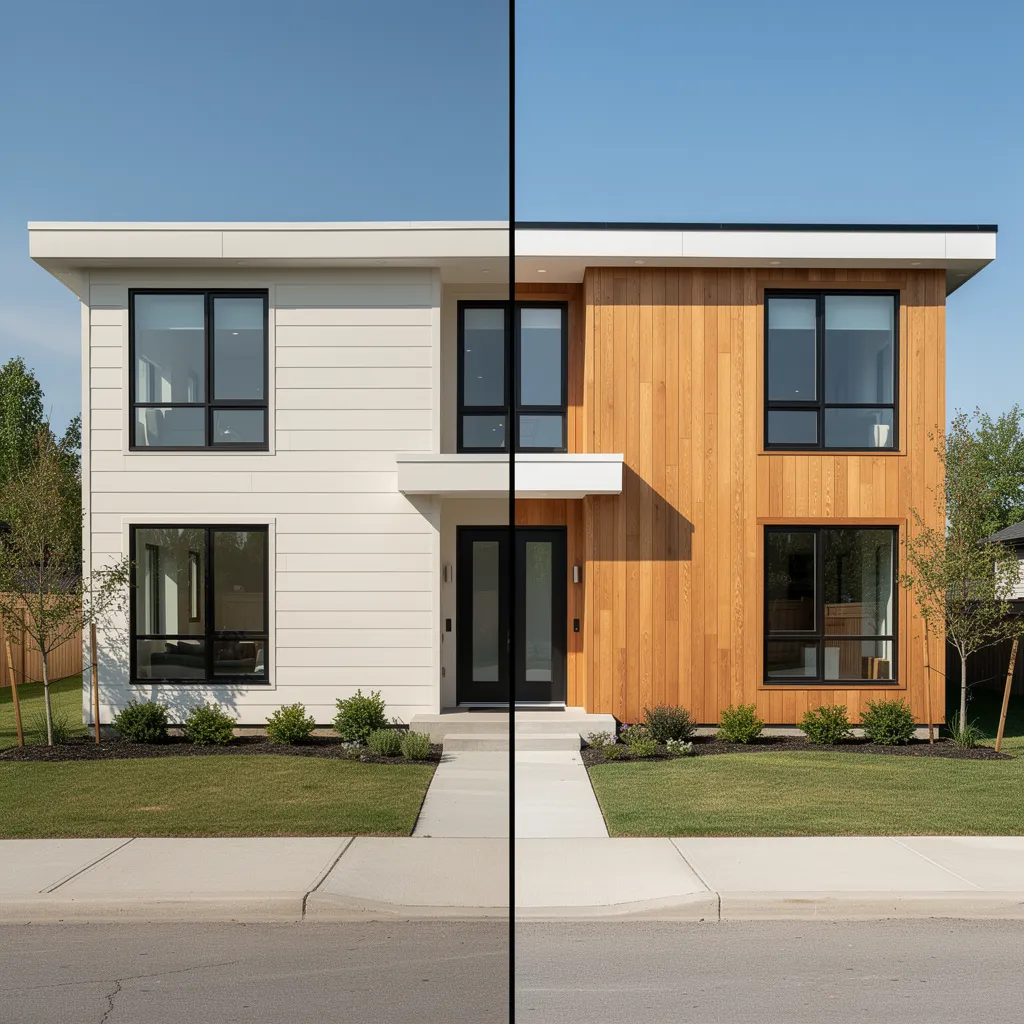
- Vinyl Siding: Available in various colors and styles, vinyl can mimic the look of wood or brick without the associated costs.
- Fiber Cement Siding: This offers more design flexibility with paint and texture options, allowing homeowners to match their personal style.
- Engineered Wood Siding: Known for its natural appearance, it can be customized in various finishes and colors.
The variety of finishes and profiles means you can choose siding that complements your home’s architecture while delivering the durability and performance you expect.
Professional Guidance:
Engaging qualified professionals during selection and installation improves outcomes. Contractors provide climate-specific recommendations, ensure code compliance, and deliver workmanship that protects your investment.
Local specialists understand regional material approvals and installation techniques that mitigate common failure modes. Their guidance helps align material selection with budget and performance goals.
Alliance Exteriors Inc.
For professional siding installation, consider the expertise of Alliance Exteriors Inc. As a Toronto-based exterior renovation company, they specialize in siding installation, offering a wide range of materials to suit various climates and designs. Their skilled team ensures that installation adheres to the highest standards, maximizing your investment in quality siding.
What Are the Top Siding Materials Suitable for Different Climates?
Matching material to climate is essential for reliable performance. Recommended options include fiber cement for cold regions, engineered wood for humid areas, and vinyl for hot, arid climates, each chosen for proven performance under those conditions.
How Do Vinyl, Fiber Cement, Wood, and Metal Siding Compare?
Below is a concise comparison highlighting cost, durability, energy performance, and maintenance to help determine which material best meets your priorities and site conditions.
Material
Cost
Durability
Energy Efficiency
Maintenance
Vinyl
Low
Moderate
Moderate
Low
Fiber Cement
Moderate
High
High
Moderate
Engineered Wood
Moderate
Moderate
High
Moderate
Metal
High
Very High
Moderate
Low
These comparisons clarify trade-offs so you can prioritise cost, lifespan, efficiency, or low maintenance when selecting siding for your project.
Which Siding Materials Offer Superior Durability in Harsh Weather?
In severe weather conditions, fiber cement stands out for impact resistance, moisture tolerance, and dimensional stability, making it a strong choice where durability is paramount.
How Does Climate Impact Siding Performance and Material Choice in the GTA and North York?
Greater Toronto and North York experience humid summers and freezing winters. Materials must manage moisture, provide thermal resistance, and withstand freeze–thaw cycles to maintain performance and energy efficiency.
Considering materials like fiber cement and engineered wood that perform across temperature and moisture variations is recommended. Additionally, consulting local experts will help you select products and installation methods suited to these specific regional conditions.
What Siding Options Are Best for Cold Climates and Snow Exposure?
For cold climates with snow and ice, choose materials with proven freeze resistance and dimensional stability. Fiber cement is frequently recommended for its ability to withstand low temperatures without cracking.
Which Siding Materials Excel in Humid and Wet Environments?
In humid or wet settings, engineered wood with moisture-resistant treatments reduces the risk of rot and decay. Select products with demonstrated moisture management and manufacturer warranties where available.
What Are the Energy Efficiency Benefits of Various Siding Materials?
Energy-efficient siding lowers heating and cooling loads. Fiber cement and engineered wood offer strong thermal performance when combined with appropriate insulation and airtight installation, producing measurable energy savings.
How Does Insulation Impact Home Energy Savings?
Adding insulation and choosing siding with higher R-values reduces heat transfer and lowers HVAC demand. Insulated systems and proper air-sealing deliver the most consistent energy savings and improved occupant comfort.
Which Siding Types Contribute to Eco-Friendly and Sustainable Homes?
Selecting sustainably sourced, durable materials supports a lower environmental footprint. Fiber cement and engineered wood typically offer favourable life-cycle profiles by combining longevity with responsible material sourcing.
What Are the Installation Considerations and Cost Factors for Siding?
Installation costs reflect material weight, installation complexity, and labour requirements. Heavier materials like fiber cement may entail higher installation effort but often justify the cost through extended service life and reduced long-term maintenance.
What Maintenance Practices Maximize the Longevity of Your Siding?
To preserve siding performance and appearance, adopt a consistent maintenance routine focused on cleaning, inspection, and prompt repairs.
- Cleaning: Regular washing to remove dirt and grime.
- Inspection: Periodic checks for signs of wear or damage.
- Repairs: Timely fixes to any identified issues.
Routine maintenance protects your investment, prevents minor issues from escalating, and ensures that siding continues to perform and look its best for years.
Frequently Asked Questions
1. How can climate influence the longevity of my siding material?
Climate directly affects siding lifespan through temperature swings, humidity, and wind exposure. Materials exposed to extreme heat, freeze–thaw cycles, or persistent moisture will experience accelerated deterioration if not matched to the environment. For example, fiber cement tolerates wide temperature ranges and resists many weather stresses, while vinyl can become brittle in severe cold. Choosing a material aligned with local conditions maximises service life.
2. Are there any aesthetic differences between siding materials?
Yes. Vinyl offers a wide palette and low-cost options that mimic other materials. Fiber cement provides texture and accepts paint well for tailored looks. Engineered wood gives a natural wood appearance with varied finishes. Select the material whose aesthetic options match your home’s architecture and desired maintenance level.
3. What are the installation challenges associated with different siding types?
Installation complexity varies by material. Fiber cement is heavier and often requires specialised cutting tools and fastening methods, increasing labour time. Vinyl is lighter and quicker to install, which can lower installation costs. Engineered wood may need careful moisture detailing. Understanding these differences helps you plan labour and budget accurately.
4. How do I determine the best siding for energy efficiency?
Evaluate a product’s insulating properties and how it integrates with the wall assembly. Look for higher R-values, insulated siding systems, and professional installation that ensures continuous air barriers. Consulting professionals to assess your home’s thermal performance will identify the most effective siding and insulation options.
5. Are there specific siding materials that offer better environmental benefits?
Certain materials have clearer sustainability advantages. Fiber cement often uses long-lasting components that reduce replacement frequency. Engineered wood can be manufactured from renewable sources. Vinyl is recyclable but may have higher production impacts. Review product certifications and manufacturer information to confirm environmental claims.
6. What maintenance is essential for different siding types?
Maintenance varies by material. Vinyl requires periodic cleaning to remove buildup. Fiber cement should be inspected for cracks and repainted as needed. Engineered wood needs routine checks for moisture intrusion and timely treatments to prevent rot and pest damage. Follow manufacturer maintenance guidance to preserve warranties and performance.
7. How can I enhance the insulation properties of my siding?
Improve insulation by adding an insulated underlayment or selecting siding systems with integrated insulation. Ensure gaps are sealed and the installation includes proper air and moisture barriers. These measures enhance thermal performance and reduce heating and cooling costs. Professional assessment will identify the most effective approach for your home.
Conclusion
Choosing the appropriate siding improves durability, energy performance, and curb appeal while protecting against local climate stresses. Understanding the trade-offs among fiber cement, engineered wood, and vinyl allows homeowners to make informed, results-focused decisions. Engaging experienced professionals streamlines selection and ensures high-quality installation, maximising the lifetime value of your siding investment.